More Than a Studio: 15 Years of Teaching Students the Design, Make, Design Loop
After more than 15 years of teaching the design, make, design loop where students experience the direct (and sometimes brutal) consequences of their design decisions, instructors Randy Lanou and Erik Mehlman are stepping back from the program they helped found. Now, a new generation of instructors will lead students in this experiential summer program.
After countless tests, the moment had arrived. Students in the School of Architecture’s Design + Build program were tackling a project involving pouring concrete in place, and they had just enough materials to get it right in one shot. Hoping there wouldn’t be a blowout from the concrete mold, the team anxiously watched the setup. With a minor blowout forming in one corner, it was all hands on deck to scramble to secure the base in enough time for the concrete to cure.
“There was a significant amount of panic in my blood for a good hour that morning,” Erik Mehlman, partner and design lead at BuildSense, recalls. And now, with no visible evidence of the setback in the final project, students rely on the instructors’ memories on past projects as lessons learned.
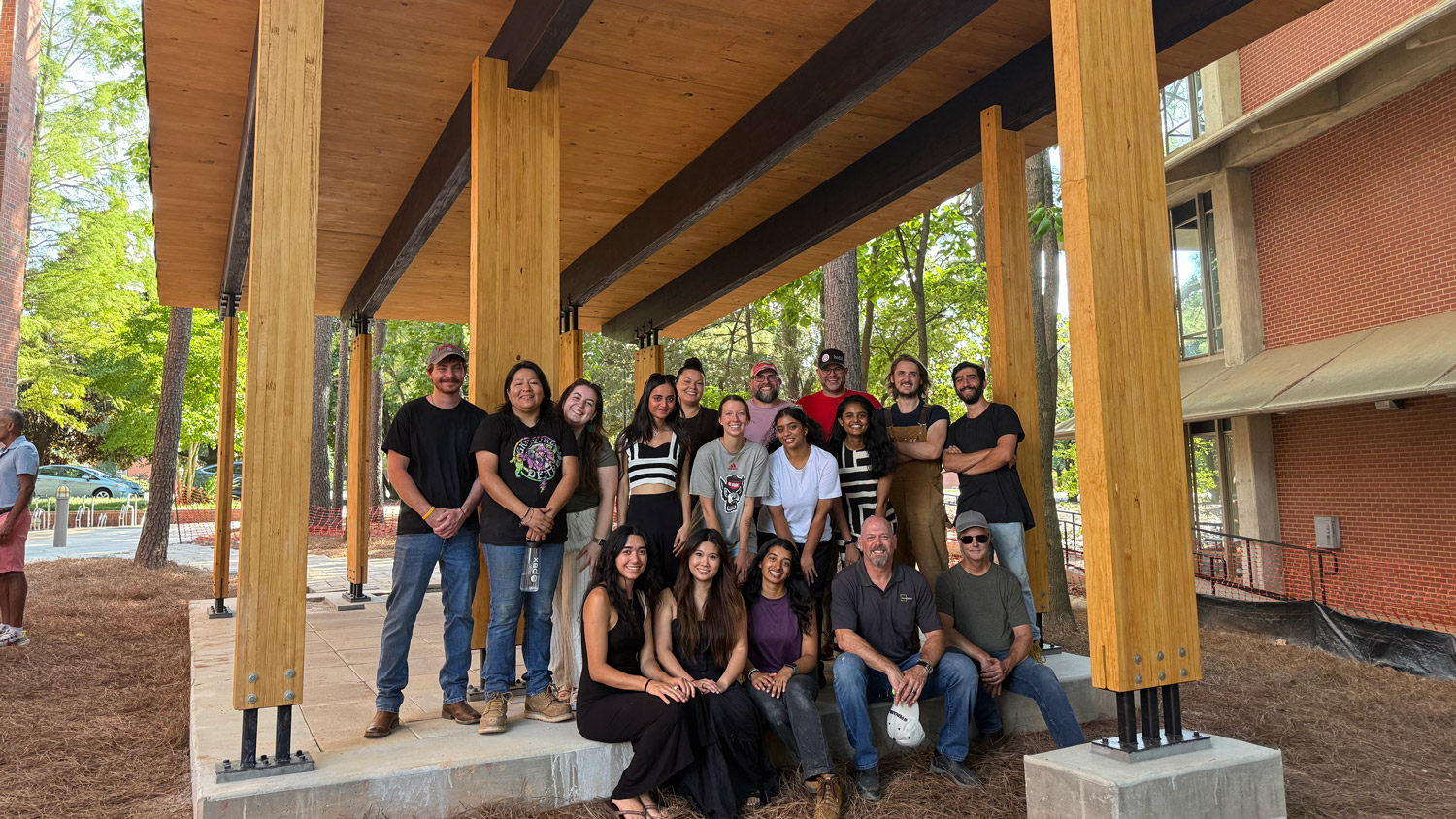
Randy Lanou ’97, founder and consultant at BuildSense, and Erik Mehlman ’99 are founding instructors for the School of Architecture’s Design + Build program, which emphasizes the design-make-design cycle to encourage students to conceptualize and execute a design project in just 11 weeks over the summer.
A Shared Vision
The two had met as students at NC State, both working in the College of Design’s Materials Lab, fondly known as “the shop.” Two years after graduating, Lanou founded BuildSense, wanting to bring a change to what he had seen in the construction industry in Chicago. “We would work with architects, and I felt that the drawings were just thrown over the fence to a builder, without any coordination or feedback,” Lanou says. “That’s the reason I came to get my master’s degree at NC State.”
“Trying to build something that you designed, whether you go into the design-build field or not – it makes you a better designer. Sometimes the students see the brutal and unhappy consequences of their design decisions, and it makes them into better designers,” Lanou adds.
Less than 10 years later, Lanou and Department Head Robin Abrams worked together to start a design-build program. The first design + build studio projects were pavilions for Crabtree Lake Park and Blue Jay Point Park as part of a studio Lanou taught with Frank Harmon. The second studio, with no budget allocated, was a partnership with Wake County facilities to build shelters at three recycling centers in 2008.
Lanou notes there was some resistance at first. But every year, they learned from the projects they had completed, taking time to look back on what worked and what hadn’t and refining just what was possible to accomplish in those 11 weeks.
“I look back and think, we were pretty nuts back then. But it took that kind of mentality to get things done. There was no precedent,” adds Mehlman.
Bringing Design Ideas to Life
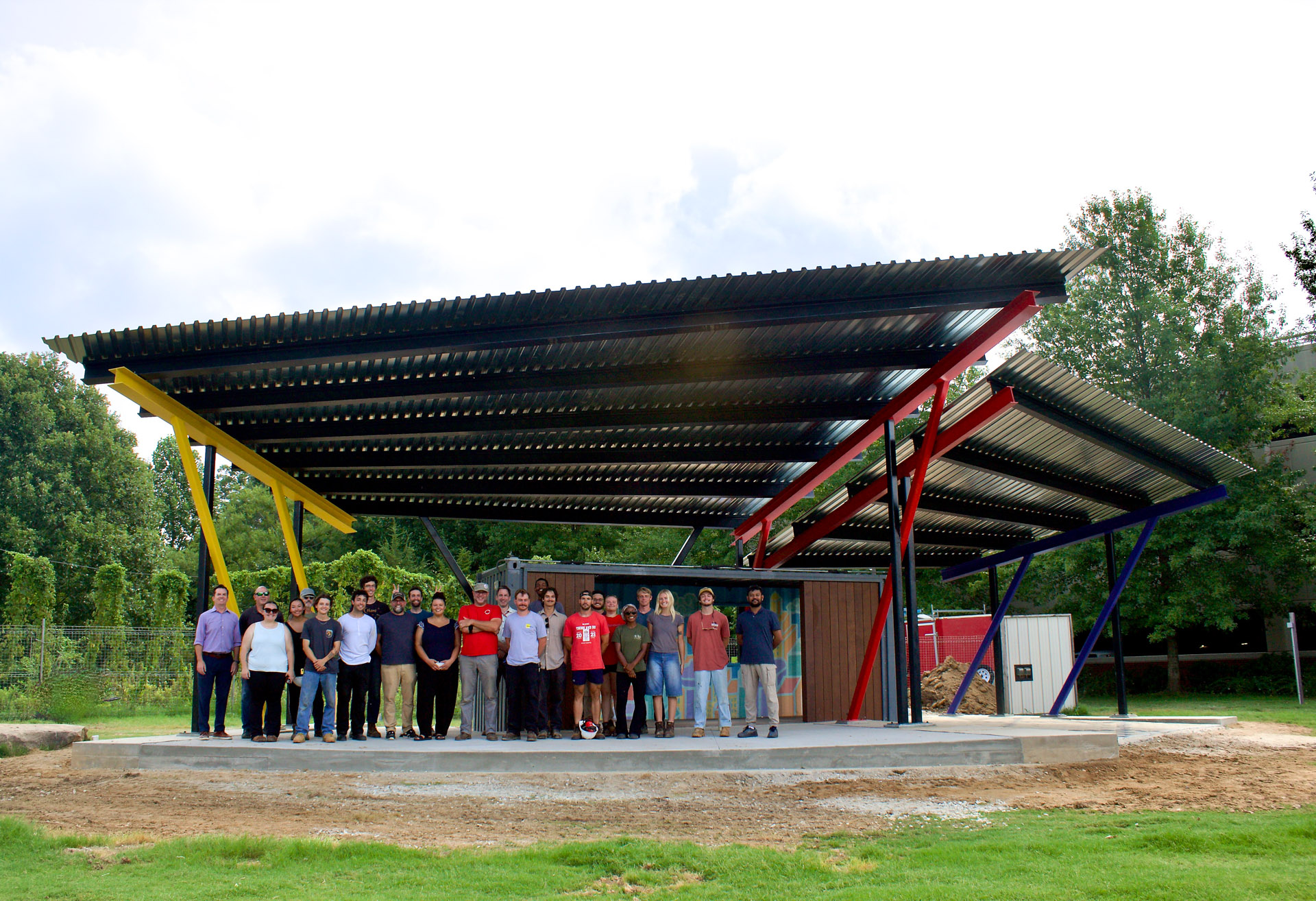
Over the past 15 years, they’ve seen lots of setbacks, but also lots of wins. Through their projects, they have been able to create multiple outdoor classroom and gathering structures for Durham Parks and Rec, two permanent projects at the NCMA, three harvesting and gathering pavilions for non-profit farm organizations, an animal husbandry facility for the College of Veterinary Medicine, shade structures for a skate park, a mobile history museum for the Town of Princeville, a mobile tiny home and even a floating lab for Durham Public Schools. As part of the learning process, students visit past program sites to learn about them and see how they’ve aged over time.
All of the projects’ challenges paled in comparison to seeing the students thrive in the program they had created. The design + build program is a lesson in teamwork, in pushing past setbacks and in learning new skill sets, including project conception, client relationships and some of the politics of getting things done. Students are able to experience a different dynamic than their studio work, graded as a team.
“One year, we saw the most quiet and unassuming student get into an excavator, who had never run a piece of heavy equipment before. And they became the site excavation lead, because they had a knack for it,” said Mehlman. “And seeing the empowerment of someone getting into that position, realizing they have skills they didn’t know they had – they walked away with a different head on their shoulders.”
Other students have embraced skills such as welding, working with new materials and exploring complex joining techniques. Many mock-ups and lots of trial and error mean that when it’s time to make those joins for the final project, they will be successful. And the results of their hard work mean that they have a tangible project in their portfolio – not just a rendering. That helps set them apart from peers as they enter the job market.
A Lasting Legacy
One of the most successful parts of the program that Lanou and Mehlman have built is its lasting legacy. As time has passed, they’ve been able to hire former design + build students as architects working at BuildSense. Now, that work is coming full circle as new instructors join the program. Ruby Reeves ’13, now a partner at BuildSense, will help carry on the legacy alongside Adam Ward ’13, owner of A Ward Architecture, Joel Lubell ’03, ’16, owner at Armature Design Build, and Justin Phillips ’26.
The program’s lasting legacy is not only in its strong instructor team, but also through the support of late alumnus Henry W. Johnston. Recognizing the impact of hands-on learning, Johnston established a one million dollar endowment to ensure the program continues year after year.
Lanou and Mehlman have given a collective 330 weeks of their time to the program over the past 15 years, devoting a majority of their summers to helping students achieve their vision. For both, it’s a time to take a step back and explore involvement with the college in other ways.
“This program has always been a really good rejuvenation of my spirit,” Mehlman says. “It’s always been a good reset for me to come at a problem from a completely pure design perspective, to say ‘forget about costs,’ and just figure out how we can get it done before revisiting costs,” he adds.
“I make a joke about this, but adjunct professors don’t do this for the money,” Lanou says. “The motivation has to be somewhere else. This is one of my favorite things to do every year, even though it kills summer travel, and doesn’t pay much and pushes us on the rest of our regular jobs…all that stuff fades back because the students are extraordinary.”
Lanou adds that watching the students work on a team, realizing the consequences of their decisions, but still delivering an amazing project has kept him coming back. “Every time we finish a project, I think maybe we should stop, because it hasn’t gone down in a ball of flames,” he jokes. “But it keeps working…because of the students.”
Both Lanou and Mehlman felt that they’ve built a lasting legacy that can continue without their support. “Now it’s ready for another team to take it on,” Lanou says.
- Categories: